.gif)
.jpg)

18/06/2024


Similarities between Türkiye and Spain
Spain and Türkiye are two countries geographically located in the Mediterranean region. Geographically, they share many similarities. Both countries exhibit different climate types based on their geographical regions. From a climatic perspective, the Mediterranean climate is prevalent in both countries. They both have mountainous and rugged terrain. The Anatolian Plateau in Türkiye, forming a significant part of the country, and the Central and Northern Iberian Plateaus in Spain, are characterized by continental climate influences and high elevations. The similarity arises from the fact that both plateaus are located in the inner regions.
The elevations of the plateaus in Central and Northern Iberian Peninsula differ; while the Central Plateau has an elevation of approximately 600 meters, the Northern Iberian Plateau averages around 700 meters. These plateaus consist of vast plains shaped by rivers and utilized for agriculture and livestock. In the spanish's Central Plateau, crops such as cereals, olives, grapes for wine, and potatoes are cultivated, while the Northern Iberian Plateau focuses on the production of wheat, barley, corn, sugar beets, potatoes, and livestock.
Türkiye's Anatolian Plateau, with an average elevation of 1000 meters, is known for advanced agricultural activities, including the cultivation of grains, legumes, sugar beets, as well as fruit cultivation such as apples and vineyards. Among the Mediterranean products, both countries produce olives, citrus fruits, tomatoes, peppers, eggplants, zucchinis, watermelons, and melons. In terms of the export of Mediterranean products to Central Europe (especially Germany) and Eastern countries, Türkiye and Spain play a critical role due to their geographical proximity, high production capacity, product diversity, quality standards, and logistical infrastructure.
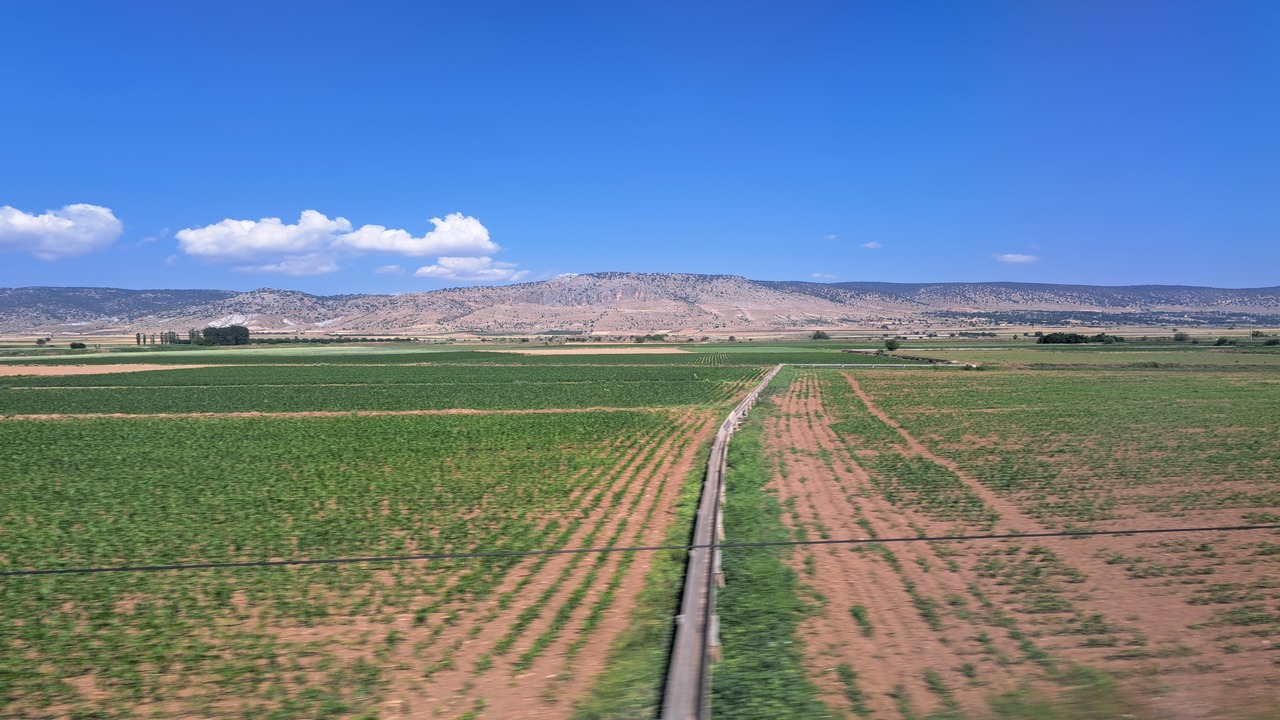
Irrigated corn in the Anatolia plateau, Turkiye.
The future of the Mediterranean crops in Türkiye
According to the Turkish Statistical Institute (TURKSTAT) data, Türkiye's total agricultural land is recorded as 38,063 thousand hectares. This vast area is allocated for various agricultural uses, with cultivated areas covering the largest share at 52.2% of the total agricultural land. These cultivated areas include land used for various agricultural activities.
Permanent grassland and pasture areas account for 38.4% of the total agricultural land. These areas are typically used for livestock activities (mainly sheeps and cows) and are preserved as continuous pastures or meadows. Areas under long-lived plants, particularly perennial orchards, make up 9.4% of the total agricultural land. These areas are designated for growing long-term agricultural products, such as fruit trees.
Türkiye holds a significant position in global olive oil production, with olive trees predominantly cultivated in the Aegean, Marmara, and Mediterranean regions. In the 2022-23 season, Türkiye achieved a record performance in world olive oil exports. The country's olive oil production has shown an increasing trend in recent years, reaching approximately 736 thousand tons of olives and 422 thousand tons of olive oil in 2022. According to the initial plant production estimate for 2023 by TURKSTAT, olive production is expected to reach 2.232 million tons.
Balikesir, one of Türkiye's major olive production centers, hosts 14 million olive trees. However, vegetable production in Türkiye decreased by 0.5% in 2022, totaling approximately 31.6 million tons. Tomato production, a significant component of vegetable cultivation, reached 8.7 million tons in the 2021/22 season, with Antalya, Bursa, and Manisa being leading provinces.
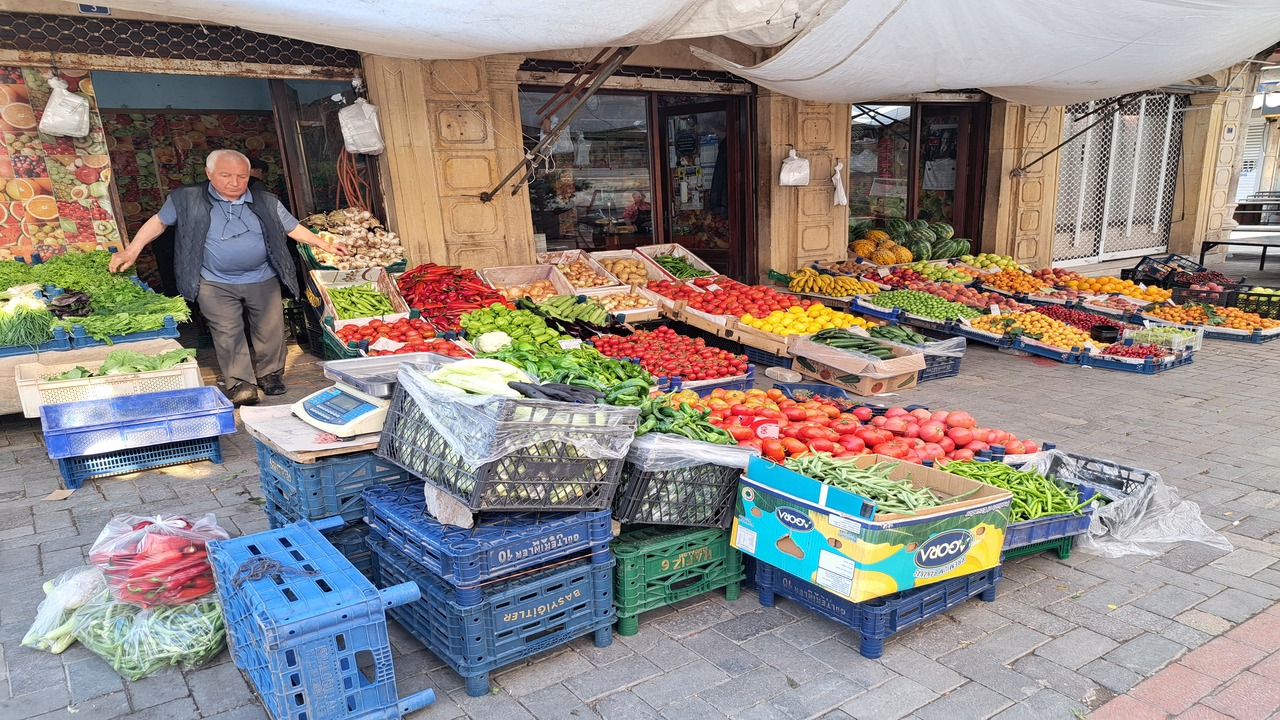
Fruit and vegetable market in Usak, Türkiye.
Turning to exports, Türkiye exported 226 thousand tons of tomatoes in 2021, with Russia, Ukraine, and Romania being the main destinations. In 2022, Türkiye ranked fifth in tomato exports with a 7.4% share, surpassing Russia in tomato exports compared to the previous year. In the first four months of 2023, Türkiye's tomato exports reached approximately 248 thousand tons.
Fruit production increased by 5.8% in 2022, reaching approximately 23.6 million tons. Apple production increased by 18.8%, peach by 7.4%, cherry by 9.1%, strawberry by 12.3%, and pomegranate by 7.3%.
Türkiye holds a significant position in viticulture and wine production. The country ranks fifth globally in terms of vineyard area, with Manisa, Mardin, and Denizli being prominent provinces in vineyard cultivation. In the 2022 production season, a vineyard area of 420 thousand hectares yielded 3.6 million tons of grapes. Türkiye's grape exports in the 2021/2022 period reached 1.4 million tons, 38.4% of grape production consists of seedless table grapes, while 28.2% is made up of seedless raisins. Türkiye's domestic consumption of seedless raisins is estimated to be between 35,000 tons and 50,000 tons. Unique grape varieties such as Bogazkere, Öküzgözü, Kalecik Karasi, and Sultaniye are internationally recognized. Challenges in viticulture and wine production in Türkiye include high taxes, quality issues, and low productivity.
In 2021, Türkiye's barley production ranked among the top 10 countries globally, reaching 5.75 million tons. Türkiye is also a significant player in the production of hard wheat, commonly used in pasta, producing 2.5 million tons in 2021. A 3.8% increase in wheat production is expected for the 2022/23 season, totaling 20.5 million tons.
In recent years, Türkiye has observed an increase in the production of hazelnuts, olives, pomegranates, kiwis, avocados, walnuts, almonds, and pumpkin seeds.
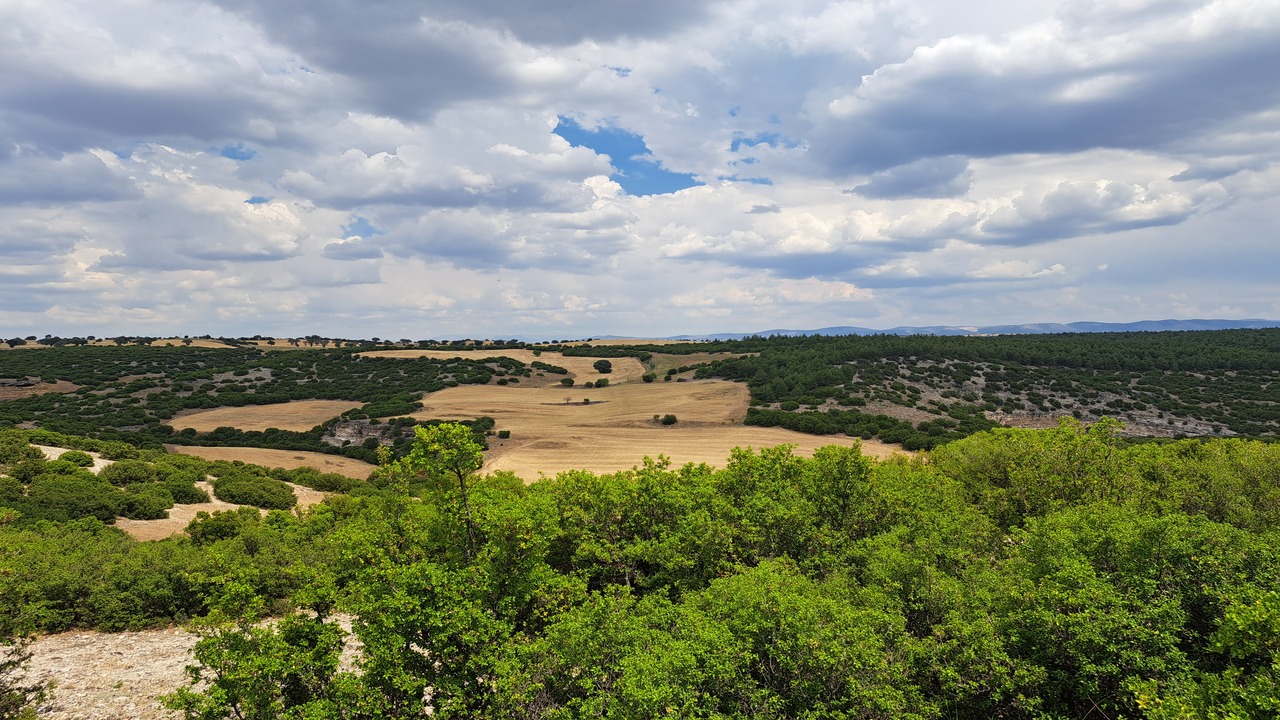
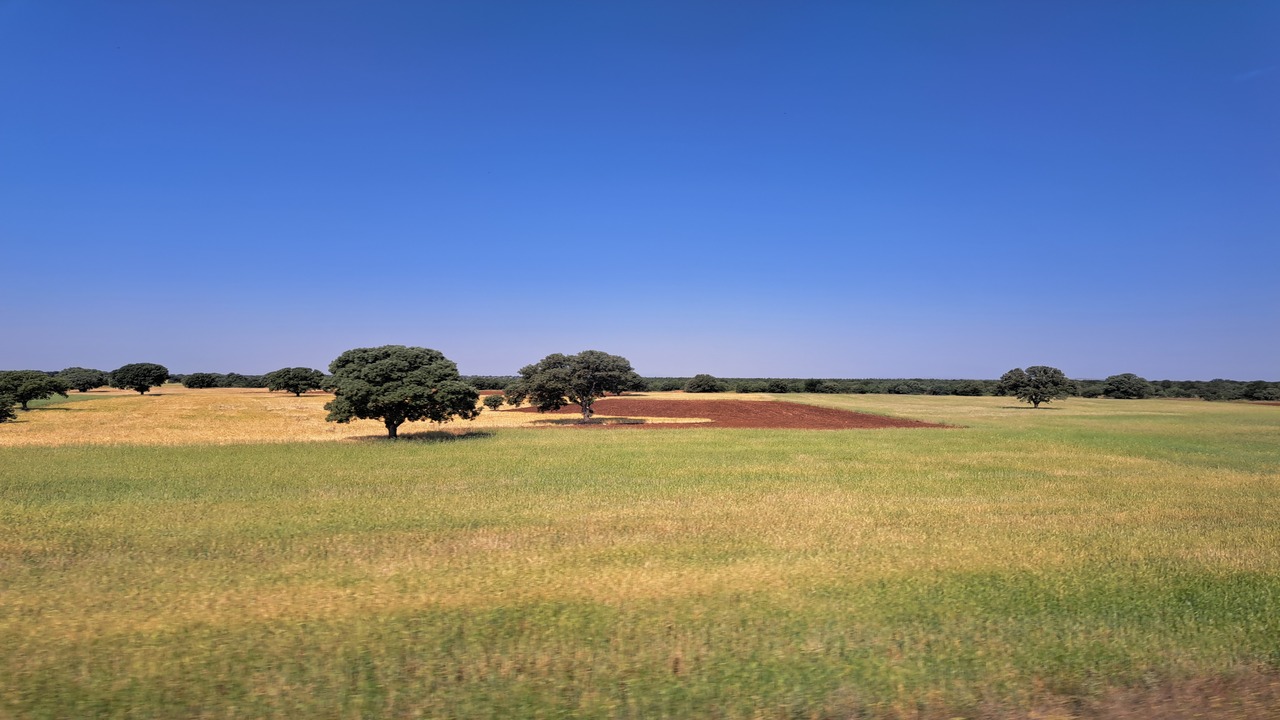
Landscape in the Anatolia plateau near Usak, Türkiye.
Challenges and advantages
When examining Türkiye's status as a candidate for membership in the European Union, it becomes evident that Türkiye plays a pivotal role as a bridge between Asia and Europe and serves as a key to accessing Asia for Europe. Surrounded by seas on three sides and having both a maritime and terrestrial connection to Asia and Europe, Türkiye holds a significant share in terms of logistics. Additionally, the country possesses substantial agricultural potential.
The integration of modern agricultural techniques with renewable energy makes Türkiye a crucial player in supplying high-quality agricultural products and energy to the European Union. Practices such as transitioning irrigation systems to drip irrigation, adopting high-density systems for new olive oil crops, utilizing greenhouses for vegetable production and energy generation through solar energy exemplify how modern agricultural techniques can enhance sustainability in Türkiye's agricultural sector.
This situation provides Türkiye with a strategic advantage in its relations with the European Union. In support of candidate and potential candidate countries, the European Union has developed instruments such as the Instrument for Pre-Accession Assistance (IPA). In this context, Türkiye has prepared the IPARD (IPA on Rural Development) Program focusing on Rural Development. The IPARD program aims to enhance sustainability and competitiveness in Türkiye's agricultural sector by supporting various areas, including the adoption of modern irrigation systems, the modernization of agricultural equipment, rural development projects, agricultural education and consultancy, and projects related to plant and animal health.
The success of Türkiye in implementing IPARD projects within the framework of cooperation with the European Union can be considered a significant step toward achieving the goal of becoming a potential member state in the EU.
Refugees and policies effects on Turkish Agriculture
Türkiye, according to the Turkish Statistical Institute (TURKSTAT) data as of October 19, 2023, is currently hosting approximately 3,264,248 Syrian refugees. The financial commitment for their support has reached 13,000 million dollars. While this substantial investment reflects Türkiye's humanitarian efforts, it also poses a multifaceted challenge to the Turkish economy. The sheer scale of the refugee population creates potential risks across various economic sectors. Refugees damage in Turkish Agricultural sector seems simply. Cheap workmanship is the biggest damage factor in Turkish Agricultural sector. As well as in the other economical sectors we can see same situation on them. Recently The Turkish government take some policy to protect to economy but its difficult to interfere so many refugees not registered and many passer refugees come to Türkiye for arrive to European countries. Usually refugees are working as seasonal worker on agriculture so it cause unemployment in Türkiye and cause unregistered labour. To see these effects in all sectors is possible which damage economy and cause unemployment on Turkish citizens. Howsoever this problem is most effective on agriculture because agricultural workers usually can opportunity to working unregistered and some agricultural works don’t need qualification so these factor directing the Turkish farmers to give business opportunity to refugees because its cheaper than and doesn’t need health and other insurances.
Conclusion and remarks
Türkiye and Spain, due to similar climate and agricultural products, are both focused on common agricultural challenges. Both countries hold significant positions in the European market, paving the way for mutual economic benefits through collaboration. The common agricultural future of Spain and Türkiye could be built on cooperation opportunities and international agricultural trade, due to their situation in both the extremes of Mediterranean region.
By increasing the trade of agricultural products between the two countries, mutual economic benefits can be achieved. Additionally, sharing knowledge and experience in agricultural technology and sustainable farming practices can further enhance the potential for future collaboration. Türkiye's adoption of sound agricultural policies and its acceleration of internal changes towards the transition to good farming practices could lead to improvements in the sector.
On the other hand, improvements in Spain's water issues and international agreements in the fields of agriculture, economy, and academia could provide opportunities for both countries to have a bright sustainable agricultural and economic future. This collaboration between the two nations could not only impact the agricultural sector but also contribute positively to overall economic development and sustainability.